Heritage and housing: a false choice?
As Australia grapples with housing affordability and the need for greater housing supply, the role of heritage protection is under renewed scrutiny. GML CEO Sharon Veale considers economist Peter Tulip’s case for heritage legislation reform and explores the broader economic and public value questions at the heart of the debate.
A recent paper by economist Peter Tulip, Reform of Heritage Legislation, argues that heritage protection is a significant contributor to Australia’s housing affordability challenges because listing decisions fail to properly account for economic costs. It calls for major reforms, including formal cost-benefit assessments for heritage listings, easier pathways to delisting, and compensation for owners of heritage-listed properties.
The paper raises important questions about how heritage regulation operates in rapidly growing cities. As governments seek ways to increase housing supply, heritage conservation is inevitably drawn into broader debates about planning reform. While the paper makes some valid observations about process and policy, its conclusions rest on contestable economic assumptions and a narrow account of heritage value.
The issue is not whether heritage protection has economic effects, but whether those effects justify treating heritage as a principal cause of housing unaffordability. A stronger policy debate would recognise both the costs of constraint and the public value created by conserving places that give cities their character, continuity and distinctiveness.
What the paper argues
The central argument is that heritage listing decisions do not adequately weigh the costs of protection against the benefits of conservation. The paper contends that heritage controls often prevent higher-density redevelopment, reduce land values, and contribute to housing shortages. It suggests that many individually listed buildings and conservation areas have limited public value, and that heritage protection is sometimes used as a tool to resist new development rather than conserve genuinely significant places.
The paper points to examples in Sydney and Melbourne where heritage conservation areas cover substantial portions of residential land and highlights situations where landowners may be unable to realise the development potential of their sites because of heritage restrictions. It argues that these economic costs are largely ignored in heritage decision-making.
Important questions worth discussing
The paper is right to highlight the need for ongoing review of heritage processes. Questions about transparency, consistency, the evidence supporting listings, and the interaction between heritage policy and strategic planning are legitimate topics for discussion. Heritage professionals should be prepared to engage with these issues and explain how conservation decisions are made.
The paper also highlights the challenges arising when planning controls change rapidly. Transport-oriented development initiatives, strategic rezoning and urban renewal programs can create tensions between conservation objectives and growth objectives. Governments and communities must grapple with these competing priorities in a transparent and balanced way.

‘The question is not whether heritage has a cost, but whether the value of our shared cultural inheritance can be measured solely through the lens of redevelopment potential.’
Challenging the economic assumptions
Where the paper is less convincing is in its underlying economic framework.
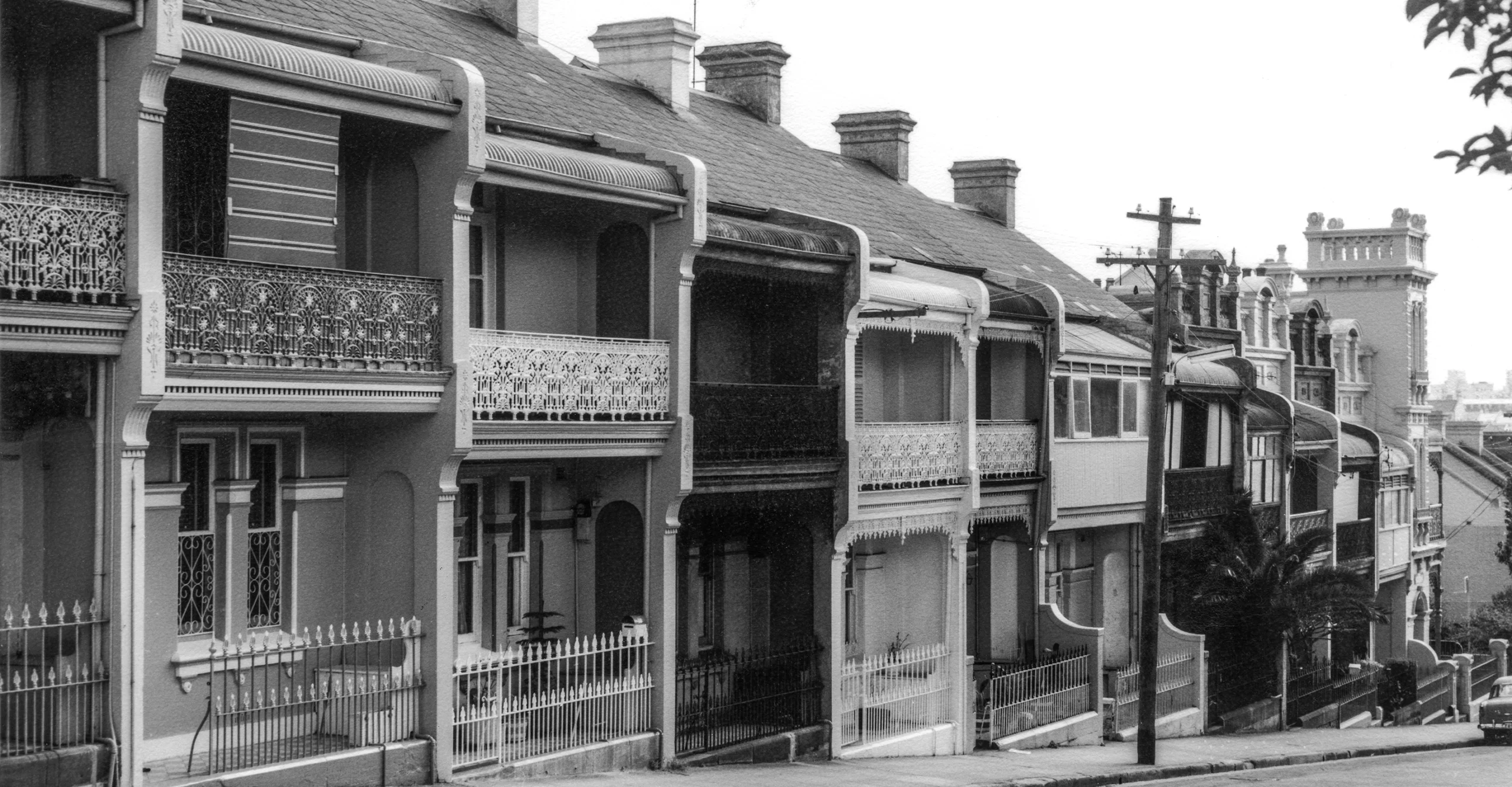
At its core, the analysis assumes that redevelopment value provides a meaningful measure of the opportunity cost of heritage protection. Yet heritage conservation exists precisely because markets do not capture all forms of value. Places such as Paddington and Haberfield show that heritage character can attract a property premium because coherent historic streetscapes and distinctive urban form are highly valued. But that premium captures only part of the value at stake. It reflects private demand for desirable places, not the full public benefits associated with cultural identity, collective memory, community character, education, tourism and urban distinctiveness.
Similarly, the paper relies heavily on willingness-to-pay studies to estimate the public value of heritage conservation. Such studies can be useful, but they have limitations. People frequently undervalue benefits that are shared collectively, experienced indirectly, or assumed to be permanent. Many heritage places become important precisely because previous generations chose to conserve them before their value was fully appreciated. A strict reliance on present-day willingness-to-pay risks underestimating long-term cultural significance.
The paper also treats foregone development potential as an economic loss. However, development rights are not fixed or inherent entitlements. They are created and shaped by planning systems that seek to balance many public interests, including environmental protection, infrastructure capacity, urban design, community wellbeing and heritage conservation. The assumption that all additional value created through rezoning should accrue to landowners is itself a policy choice rather than an economic certainty.
Perhaps most importantly, the paper implies a relatively direct relationship between heritage protection and housing affordability. While heritage controls may affect redevelopment opportunities in some locations, housing affordability is influenced by many factors including infrastructure delivery, construction costs, interest rates, taxation policy, land supply, labour availability and market conditions. The challenge is far broader than heritage policy alone.
Heritage value is more than architectural distinction
The paper also questions the protection of ordinary or representative buildings and conservation areas. However, contemporary heritage practice is not concerned solely with architectural excellence or landmark buildings. Heritage significance can arise from historical, social, cultural, scientific or associative values. Modest houses, industrial sites, infrastructure, public buildings and representative streetscapes often help communities understand broader historical patterns and everyday life.
If heritage systems protected only the rarest and most visually impressive places, much of Australia’s historical record would be lost. Representative places matter because they provide context and help tell the larger story of how communities evolved over time.
Heritage and growth can coexist
Perhaps the most significant weakness in the paper is the suggestion that heritage conservation and housing delivery are inherently opposed. Across Australia and internationally, cities continue to demonstrate that growth and conservation can be pursued simultaneously.
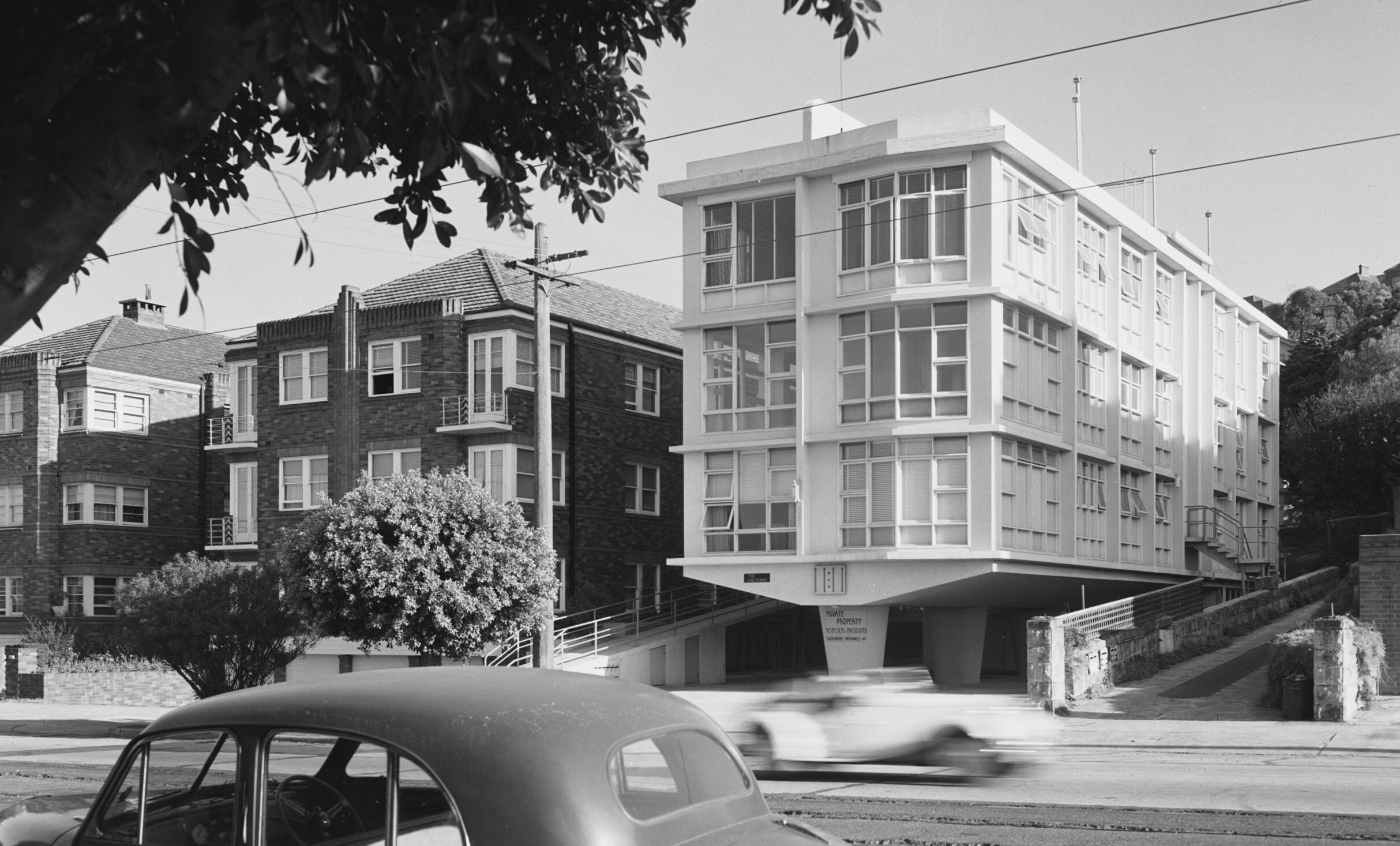
Adaptive reuse, sensitive infill development, strategic density distribution and context-responsive design all provide mechanisms for accommodating population growth while retaining heritage values. Heritage conservation does not require freezing cities in time; rather, it seeks to manage change in ways that retain the characteristics that communities value.
A better framing of the debate
The most useful contribution of Tulip’s paper may be that it encourages the heritage sector to better articulate the public benefits of conservation and to engage more directly with economic questions. However, the debate should not be framed as a choice between heritage and housing.
Australia’s challenge is to deliver the homes needed for future generations while also retaining the places that connect communities to their history and identity. Both are legitimate public objectives. The question is not whether heritage has a cost, but whether the value of our shared cultural inheritance can be measured solely through the lens of redevelopment potential.
For that reason, the paper is perhaps best seen not as a case against heritage conservation, but as a reminder that conservation professionals must continue to demonstrate why heritage remains an essential part of creating successful, liveable and sustainable cities.