Interview with Rachel Jackson on 20 years in Canberra
As GML marks 20 years in Canberra, Principal and Director Rachel Jackson reflects on two decades of heritage practice across the ACT.
What do you see as the most significant contribution GML’s Canberra office has made to the Australia’s cultural heritage?
Reflecting on our two decades of practice takes me back to why the Canberra office of GML opened in the first place. Our work extends across Australia, well beyond the ACT border. Our office was established in 2005, following the heritage amendments to the EPBC Act in the year prior.
The projects that have been the most exciting for me are the ones in the far reaches of Australia—the external territories of Christmas Island, Cocos Keeling Islands and Norfolk Island. Each place has significant natural heritage and is grounded Australia’s history as a federated Commonwealth, and some with poignant, dark and difficult layers of conflict and settler-colonisation.
Our work has helped embed heritage matters into planning, management and conservation outcomes, fostering a process that recognises heritage as a vital part of change.
In our first decade, GML supported Commonwealth agencies as they developed new strategies and policies for managing Commonwealth and National Heritage responsibilities under the EPBC Act. Our work helped establish best-practice heritage management—including toolkits, Indigenous cultural heritage consultation guidelines, and impact assessment methodologies—many of which were adopted across government.
We are proud of the standards we helped set and our ongoing role in driving innovation and continual improvement in the conservation of Australia’s cultural heritage.
Are there particular projects or partnerships that you feel best capture the spirit and impact of GML’s work in Canberra and the ACT lead by the Canberra team?
Over the past two decades, GML’s Canberra team has forged meaningful connections and delivered heritage outcomes that reach far beyond the ACT.
Our work has taken us to many diverse locations such as Exmouth, Darwin, Woomera, and Port Arthur. Each project has strengthened our relationships with local agencies and communities and enabled us to contribute to the conservation and celebration of Australia’s rich heritage.
Closer to home, we’ve built enduring working relationships with Commonwealth agencies and National Institutions in Canberra. Every time I visit Old Parliament House and walk up the front steps, I still get a thrill – history never gets old!
The National Triangle—from City Hill to Russell to Capital Hill, and all that lies within—remains one of the nation’s most significant heritage landscapes. Canberra itself, modern in its design from the outset, is shaped by people who genuinely value its enduring qualities.
Even as a small team, GML Canberra has had a big impact. How do you think that dynamic has shaped the way you work and the outcomes you deliver?
A small team is by its very nature a close team. Dynamic project demands and deadlines mean we collaborate to plan and manage our work—it is a truly collegiate team that shapes our many fabulous projects.
We are ever curious, and make it our mission to continually learn about heritage places from Traditional Owners and knowledge holders.
As we celebrate this milestone, what excites you most about the future of heritage and GML’s role in shaping the next 20 years?
We hope GML’s work can continue to influence good planning and development outcomes for our environment, and that this in turn continues to support a sustainable and heritage resilient future for Australia.
One of GML’s enduring strengths—and something I’ve benefited from deeply—is the guidance of industry leaders such as Richard Mackay, Sheridan Burke, David Logan, Peter Romey and Geoff Ashley. It’s been a privilege to translate that learning into mentoring many other consultants who are the next generation of leaders.
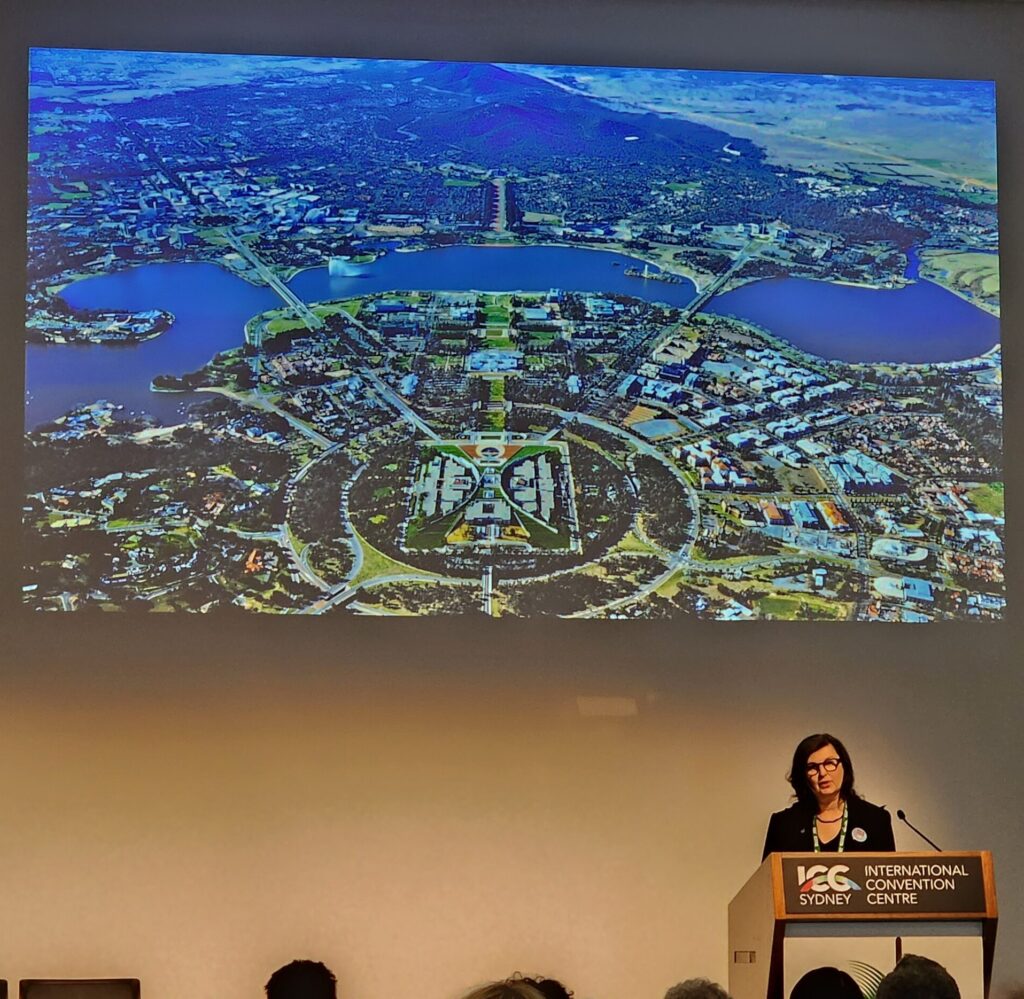
‘We’re proud of the standards we helped set and our ongoing role in driving innovation in the conservation of Australia’s cultural heritage.’